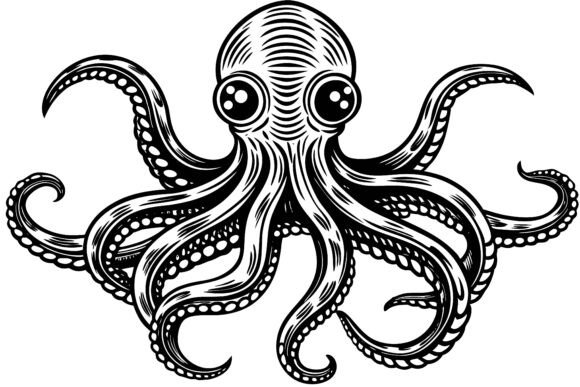
The Deep Sea Ink: Understanding the Octopus and Cthulhu Tattoo Style
In the vast ocean of tattoo artistry, certain styles emerge from the depths, carrying a distinct aesthetic and symbolic weight. The An Octopus or Cthulhu Tattoo Style represents one such niche, drawing inspiration from the mysterious creatures of the sea and the mythos of cosmic horror. This style is not merely a depiction of a tentacled entity; it is a specific artistic approach characterized by intricate linework, often embracing a sense of fluid movement, occult symbolism, and a blend of naturalistic and fantastical elements.
What makes this tattoo style distinct is its dual lineage. On one hand, it pulls from the realistic, biological complexity of octopuses—their sinuous arms, textured skin, and intelligent eyes. On the other, it incorporates the legendary, otherworldly aspects of Cthulhu and similar entities, introducing elements like ancient ruins, esoteric geometry, and a palpable sense of scale and dread. The result is a visual language that can convey themes of adaptability, hidden knowledge, power, and the unknowable.
Comparing Styles: Where the Octopus and Cthulhu Approach Fits
When considering tattoo styles, it's helpful to understand how this specific approach compares to other common categories. For instance, compared to a straightforward realistic marine life tattoo, the An Octopus or Cthulhu Tattoo Style often leans more illustrative or even graphic. It may sacrifice hyper-realistic shading for clearer linework and symbolic additions, making it potentially more suitable for narrative pieces.
Against pure Lovecraftian horror art, which can be overwhelmingly dark and chaotic, this style frequently retains an anchor in the recognizable form of the octopus, providing a balance between the familiar and the fantastic. It sits somewhat adjacent to styles like neo-traditional or illustrative blackwork, sharing their emphasis on bold outlines and detailed fill patterns, but with a content focus that is uniquely its own.
Strengths and Tradeoffs of the Style
The core strength of the An Octopus or Cthulhu Tattoo Style lies in its versatility and thematic richness. A well-executed piece can be both a beautiful naturalistic representation and a powerful personal symbol. The intricate tentacles offer a natural flow that can complement body contours, making it a strong choice for sleeve designs or larger-scale applications where movement is key.
However, there are inherent tradeoffs. The complexity of detail requires a skilled artist proficient in fine linework and often, extensive shading. A less experienced artist might struggle to capture the necessary texture or balance, leading to a design that feels muddy or overcrowded. Furthermore, the inclusion of specific Cthulhu-esque iconography—such as cosmic portals or alien architecture—can shift the piece from a personal symbol to a more genre-specific statement, which may not align with every wearer's intent.
Best-Fit Situations and Potential Limitations
This style is often an excellent fit for individuals seeking a tattoo that is more than decorative. It appeals to those interested in themes of intelligence, mystery, adaptability, or the sublime terror of the unknown. It works well for larger, dedicated spaces on the body where its detail can be appreciated, like the back, thigh, or full arm.
Its limitations become apparent in very small-scale applications. Condensing the complex interplay of tentacles and possible additional symbols into a tiny tattoo can result in a loss of clarity. Additionally, if a client's goal is purely a celebratory, bright, or minimalist piece, the often dark, intricate, and layered nature of the An Octopus or Cthulhu Tattoo Style might not be the optimal path. In such cases, a simpler aquatic symbol or a different stylistic approach like watercolor or single-line art could be more appropriate.
Decision Factors for Choosing This Tattoo Approach
Making an informed decision about adopting this style involves several practical considerations. First, artist selection is paramount. Research portfolios specifically for examples of marine life, mythological creatures, or intricate illustrative work. An artist skilled in Japanese Irezumi, for example, might excel at the flow of tentacles, while one specializing in dark fantasy art might better capture the Cthulhu mythos elements.
Second, consider the scope of your design. Are you aiming for a realistic octopus with a slight eerie twist, or a full narrative scene featuring a risen cosmic entity? Clarifying this helps guide the artist and determines the time, cost, and canvas required. Third, think about long-term resonance. While all tattoos are permanent, styles heavily tied to a specific subgenre (like cosmic horror) can feel more dated if personal interests evolve, compared to a timeless naturalistic depiction.
When This Style Is the Right Choice
The An Octopus or Cthulhu Tattoo Style may be the right choice when you have a clear conceptual blend of the natural and the supernatural in mind, and you have access to an artist whose expertise aligns with that vision. It is also a strong candidate when you intend the tattoo to cover a significant area, allowing the design's complexity to breathe and its flow to interact dynamically with your physique.
When Another Option Might Be Needed
You might need to explore other options if your primary desire is for speed, cost-effectiveness, or extreme minimalism. Small, simple symbols can fulfill a representational need without the commitment of a full illustrative piece. Similarly, if your theme is purely about the beauty of marine biology without any mystical overlay, a dedicated realistic or scientific illustration style would likely serve that purpose more directly and with greater accuracy.
Practical Applications Beyond Skin
The aesthetic principles of the An Octopus or Cthulhu Tattoo Style—intricate linework, symbolic depth, and a balance of organic and geometric forms—have resonance beyond tattoo art. This is where specialized digital assets, like thoughtfully crafted illustration sets, become valuable tools for designers. For professionals creating visuals for print, web, apps, or infographics, having editable vector files of such complex themes can save immense time and provide creative flexibility.
A well-organized AI EPS file set inspired by this style allows a designer to incorporate its distinct visual language into a project without needing to illustrate from scratch. The strengths of such a resource mirror the strengths of the tattoo style itself: versatility and detail. You can modify colors, scale elements without loss of quality, and isolate specific components like individual tentacles or esoteric symbols for use in logos, icons, or background patterns.
The tradeoff, as with any pre-made asset, is ensuring it fits your specific narrative. A generic octopus vector might not carry the exact eerie atmosphere you seek, whereas a set specifically geared toward the Cthulhu mythos might be too niche. The decision factor here is how closely the available resource matches your required tone and how easily you can adapt it. A collection offering a neat, layered structure and perfection in details provides a solid foundation, but your own design skills will determine how uniquely you can implement it.
Ultimately, whether as a permanent mark on the body or a modular component in a digital design project, the An Octopus or Cthulhu Tattoo Style offers a rich and specific visual pathway. Its value lies in its capacity to convey layered meaning through a recognizable yet adaptable form. By understanding its distinct place among artistic styles, its inherent strengths and requirements, and the situations where it shines or falters, you can make a more confident and informed choice for your creative endeavor.